
Podcast appearance
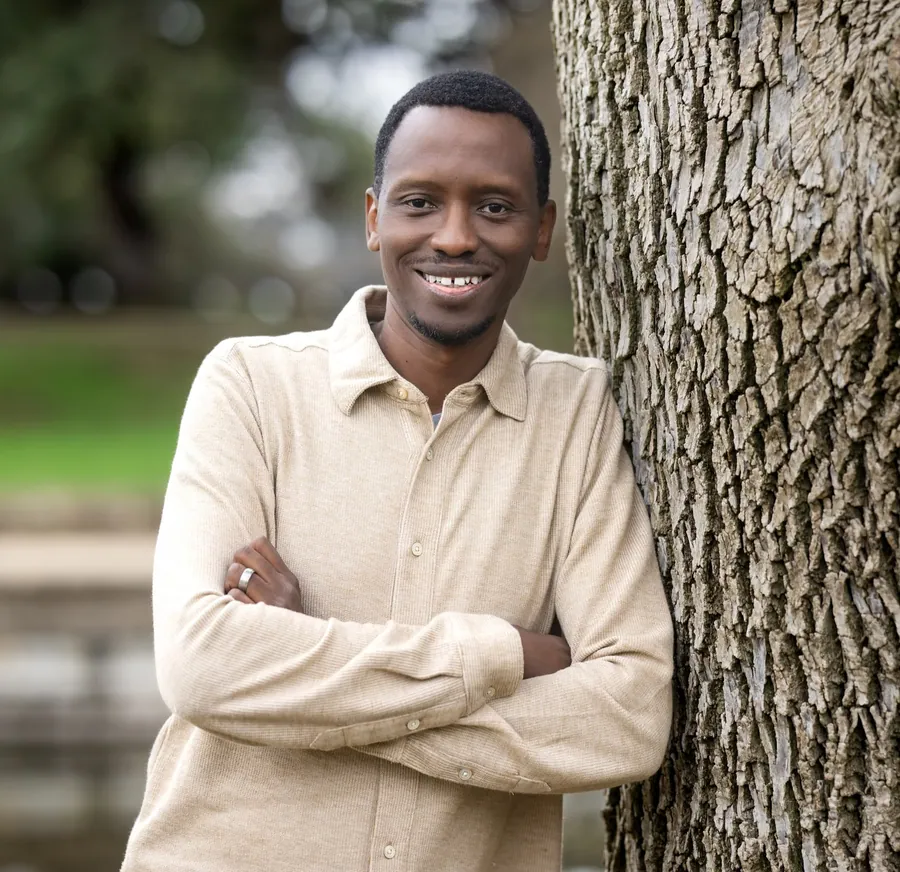
Healthy Boundaries and a United Front: Pesa Shayo on Mind Over Masculinity
Sana and Pesa Shayo discuss respectful family boundaries, three categories of marriage decisions, and the pressure men can feel between parents and spouse.
- Podcast
- Mind Over Masculinity
- Host
- Sana
- Published
- Guest
- Pesa Shayo
Listen
Mind Over Masculinity
Episode overview
About this conversation
In this Mind Over Masculinity episode, host Sana asks Pesa how setting a boundary can coexist with honoring parents. The conversation explores the tension between a family of origin and the family a couple is building.
Pesa describes three categories of decisions: those the couple makes independently, those where others are informed, and those that genuinely require collective input. The interview also returns to curiosity and remembering the friendship at the heart of a marriage.
Key takeaways
Marriage principles discussed
- A boundary need not be an act of disrespect.
- Distinguish independent, informed, and genuinely collective decisions.
- Stay curious about a loved one's perspective before defending your own.
- Remember the friendship that underpins the marriage.
Interview transcript
Mind Over Masculinity transcript
Transcript note: Published with permission. This transcript was automatically generated from the original public recording and formatted into timestamped paragraphs, with limited corrections to established names and recurring terms. Speaker labels are omitted where they could not be verified, and transcription errors may remain. Listen to the original recording for the exact wording.
Business, we are a mind over masculinity. So obviously, the discussion will be especially on men's mental health. And mental health is not just restricted to the typical discussions around, you know, depression or anxiety or stress. There are different aspects around and one of them is marriage. Okay, now let me tell you something else. There's a lot of men and this I personally believe and I agree with it. A lot of men carry pressure that they would probably never name it out loud because really it's you know it brings shame. This they're like caught between
honoring their parents and protecting their marriage and then they're partly absorbing the tension instead of setting a clear boundary. Now I'm not saying that only women go through this or only men go through this that because we are on we're talking about men so I believe this is such a crucial conversation that we are going to have today. So before I introduce my guest to all of you. Welcome back everyone to Mind Over Masculinity. I am Sinha and this is my story. I'm sitting with someone who is an author and co-founder of Live Your Best Marriage.
He's the creator of the United Brand Blueprint, joined from over 20 years of marriage, faith, and family life. He helps cross-cultural Christian couples, stop fighting each other and start facing outside pressure together. So let's get started. Let's welcome Tessa Shayo. Tessa, welcome to Mind Over Nastility. Such an honor. Thank you very much, Sana. I'm really excited to be here.
Absolutely, and more than I'm so glad that we're talking about this because I believe you'll agree with me that especially for men it kind of has been stereotypical that any conversations around marriage or relationships or the dynamics around it especially when it is coupled along with the layers of faith and religion.
It's very secluded, like it happens completely in the dark and it just remains you know? It's like what happens in Vegas, it stays in Vegas something like that and a lot of men they treat boundaries as something which is like just confrontation, argument it's just waiting to happen. But before we get into the crux of everything, Pesa, and your work, I want to start with their own story because this is not coming from just a book or a theory but it is something lived so can if it is okay, can you take us back to the early season in your marriage
when you realized this? Yes! So thank you very much, Sana. I'm really excited to be here. So So really my story started when me and my wife Whitney got married I'm originally from Kenya in Africa, she's from the United States And when we were dating everything was great We thought as long as we love each other everything will be We can solve every problem But what happened was when we got married we started dealing with issues that most couples deal with. But the fact that we came from two different cultures, that added another element to the problem. Like for example when it comes to
in-laws boundaries and things like that, basically other couples deal with in-laws and boundaries. But we were dealing with the issue that because we are coming from two different cultures, she… We were… The language was not the same so sometimes we're having the conversation but some words are lost in translation. My side of the family, even the way we define family. We define family as mom, dad, uncles, cousins, like all these people we call them family where she comes from her side of the family she calls families just mother, father and
children so it's a very nuclear family and I'm coming from this collective family and sometimes even if i meet somebody and they are coming from my where I was born and after being friends for a while I started calling them brothers. It's just we view a lot of people as family that was very new to her and also we, that brought a different dynamic to our relationship and when we were dealing with now boundaries the fact that we had, we were raised from two different areas, Different expectations, boundaries became a bigger and a different issue because when she's saying
let's set a boundary here I'm feeling like hey you're telling me I need to dishonor my parents or you are telling me I need to dishonor my relatives but to her she's like no that's no dishonor. That is just setting a boundary so just because we came from two different cultures the language really was a big problem for us.
And you know this is not something alien or something out of the blue. I tell you in India as well, now this becomes a very interesting, very nuanced discussion where even in the same faith or coming from a same, you know let's say if both the, let's say just assume it's a boy and girl they are getting married and let's assume it's a love marriage but now the boy comes from a family where he has been a part of a joint family and you know just as Lou described it for him it would be like you know a very
different world where they have a different kind of dynamics like with your relatives, with the parents. You know everyone is like you know it's one single big unit. It's like different universe altogether. I've seen like a very healthy culture where all different you You know, brothers, sisters, you know, their uncles, their aunts, everyone is like, you know, they are staying together.
They're also having different separate worlds as well. But then let's say the girl and this is not about just a boy or a girl but let's just assume here The girl is coming from a nuclear family, a bit of a dysfunctional family For her, the experience hasn't been very good when it comes to relatives or maybe grandparents because her experience has stemmed from the dysfunctionality that the parents haven't been supported Like the stereotypical culture where the girl will not be very free She would like to probably build her own identity or maybe her own world and wouldn't get anyone
into fair. Now I'm using my words a bit more carefully because there's a difference. For example, it's the difference between having a clear boundary, healthy boundary and being disrespectful and dismissive of your elders or parents or relatives who may be coming with a good intention. in the middle of a conversation.
Yeah, go ahead Pesa. So yeah that's very interesting because that's what we literally teach at Live Your Best Marriage That yes you can set the boundaries but at the same time we also say that you need to honor and respect your parents. Because those are two different things and for a lot of people it's so hard Either they teach set boundaries or they teach honor and respect their parent but having the two boundaries and honoring, I think that makes everything so unique because you might come from a place where you have expectations
maybe to take care of your family. Maybe your parents put you through college with the expectation that you will go back and help your sibling. And with that situation, we need to honor them but at the same time because you're building a new family We also need to put energy into your new family.
So we call that transpiring loyalty from your family of origin and transfer loyalty to your new family you are building because the same way your parents did, they built a family. That's why we're calling it the family of origin. The father and mother came together and created a family there.
And when we are dealing with cross-cultural couples, a lot of couples from different cultures, there is an issue where you had mentioned that the extended family also has a say in the conversation. The extended family feel like they can also make decisions and they have a say in the whole situation, which can be very confusing.
But we also have that issue has been brought up a lot and what we do is we break down decisions in we call them three buckets. There's the decisions that you as a couple will make like for example where are you going to live? Which? Where do you leave?
neighborhood you live, like where do your kids go to school. We call them, you will make them yourself as a couple. There is also other decisions that you might inform your extended family but at the same time you are still in charge of making that decision. Like, decisions like okay we have decided that we are moving to a new city or we have decided that we are We are not coming for the holidays this year.
So you are informing because they're involved in it, but you have already made a decision. And the third bucket is where these are decisions where maybe like a funeral. The whole family comes together, The family of origin comes together and everybody has tasks. Maybe you will be the one paying for this different thing.
So it's a collective decision. But even if it's a collective decision, what we teach is you still have, say, okay, what am I going to do? Maybe you cannot afford to make that contribution on this collect. Maybe it's 5,000 and you can only come up with 4,000. So you are saying, okay, this is how much I can give, but it was a collective decision because everybody in the family is chipping in.
So if you are able to know how these decisions you are making, which type of decision it makes it so easy to actually respect your family of origin and say okay, or you might not even bring the conversation to them because it has nothing to do with them.
And it's a very hard concept for some people who Every decision has to be made by the family of origin.
One question comes from my mind is,
are there any… Because it's not about cultures as well but there can be a lot of generational differences as well. For example, the previous generations, there will be difference in opinions or in how they have seen the world and how right now the dynamics are working. For example, we have both the parents working for example of a working couple.
You know you have those abbreviations I don't remember. Working couples or working parents and they're soon to be parents. Now, as a couple, as husband and wife or as parents, you are making a decision together, for example, which is something which probably your parents or your grandparents or relatives, just assuming that they come from a different generation or Nivea, thought, process of belief system they may not be privy to it so they may object or let's say they may not be able to understand it in such situations how to especially for a man
sometimes you can become for example it can be like this you are in the sandwich situation either you have to listen to your parents or relatives or you have to sometimes listen to your wife and you know there is lack of big friction here Yes, so that is very interesting because when we come, yes, so we know we are appreciating that my grandparents, my great-grandparents cannot don't even understand what I'm talking about because they can't see how they can make decisions together with their wife.
Because just the culture where they were raised and just how it is. So we are able to look at them and say, okay that's where they're coming from. They cannot see how they can talk to their wife and have this conversation. So we are respecting that. But at the same time, we are also appreciating that in 2026, in the new family that I'm building, I just don't see how. In 2026, a wife will accept with all the information that she's getting, she's getting information on her phone, TV shows, all these things, she will also feel like she needs to have a say, especially, for example,
you brought up the issue of she's working, you brought up the issue that she's working. So she already feels like I went to school, I'm working, I'm bringing some income to this 5-minute. At the same time, we also don't want decisions and this was a big issue it was brought to me and we have dealt with it is positions are being made outside the family that end up affecting her so she's getting the problem in terms of decisions are made outside the family, her husband and maybe extended family from the husband side of the family are making decisions that are going to affect her life but
she has no say in their decision. For example there was a case where a mother-in-law was you can look at the picture of the child. There was a ritual that they were going to do, but it will involve being like, they were going and make some incisions in the boy's skin.
It was a traditional ritual, yeah, and the mother-in-law was saying, my son who is the husband went through this when he was a kid. So there is no way that grandson should not go through this. This is something we do in our family. But then the wife here also was a doctor So she knows about infection and traumatized, and being a kid being traumatized so she was saying no, if this kid gets infected I'm the one who will be dealing with infection My mother-in-law will not deal with infection So she was coming from the point of
I need to protect my son from infection and being traumatized Mother-in-law said no, we did it to your husband We're gonna do it to your son Eventually, that was a very hard situation for the son because he was in the middle. He felt like he was in the middle between his wife and his mother.
But we were giving advice saying this is very important you need to respect your mom but at the same time you need to respect your mom but also you need to transfer the loyalty from from your family of origin to this new family. That is what you are building and because of that, be nice to your mom but at the same time say no we will not go through this procedure because it was very important in that family because he also could see about…he could understand the old concept of infections and
how things would go wrong. If things go wrong they will be the ones dealing with the problems. If things go right, everything is fine. But if the mother-in-law will not deal with the problems, but she's the one causing the problem but she doesn't deal with the problem. So when they were able to do this, they was able to tell his mother we can do this.
That caused a lot of problems in his side of the family because he was seen as he is a weak man, but he made a decision for his family because he believed that his family comes first, his family that he's building comes first. I'm really glad you give that example because this not just one you know black or white there's there's so many layers here and honestly I mean it can be it can be especially mentally very very challenging very taxing And I'm also aware that there are still many cultures for them, it can be completely new, that how can women talk about this?
But still, I mean, I don't want to sound very gender biased or once again getting into that generalization way. I think it's now in that culture that you can talk about this and I'm also aware that there are still many cultures for them, it can be completely new that how can women talk about this but still like at here the basic level I can see that you know in women it has been our time when people are accepting more modernized approaches and you talk about feminism and all of that stuff.
But then for men, I still believe that there's still a huge gap to openly talk about it. Probably because a man is supposed to be, okay, you have to be provider, you have to be someone who holds your family together and your parents will have this expectation from you, maybe your family will have expectations from you.
Like you have to make sure that you keep the family's name alive and with respect and dignity Well, lot of pressures on a man as well Now I'm not saying that you know That now let's talk about only masculinity and not feminism But still I think talking about this especially around masculinity can still Like just for the normal people, for the normal people who are talking about it not just for the sake of getting some traction online But in a general society how people are talking about it Which is I believe that's a long road ahead but what's your opinion?
So I just view it as there's a lot of changes and in many societies they have already exposed their girls to school So they are already going to school, this has been going on for a while Girls and boys are both going to school so they have already been exposed to these new ways of thinking And so this has been going on for a while Any place you go you can find even Prime Minister Even in India they have Prime Ministers who are women In Draghandi and all that So it's already open that they know she can lead.
They might say something in the house, but at the same time they know they elected her somehow so they know she could lead. So that is like knowing that even women can do these jobs. Now the issue comes and we can break it down when you're saying just to the regular person.
and I know it might be different if it's an arranged marriage but if it's an arranged marriage, I don't know a lot about arranged marriage. But I know that when two people are coming together usually there is that excitement that we will make this work so um if they were dating it's easier for me to say because i have a lot of experience in that which is is they are looking forward to getting married.
So, they're getting married and all that. But what is happening is once they get married, they forget that there were friends. This is the most important thing here. If you remember that you are friends, like before you got married, you were friends, that's why you are together. That friendship is what holds everything together because there's a lot of tasks that you deal with in marriage, like taking care of kids, taking care of parents, taking care of the home, paying bills.
Those are just things you need to do. But on the other side, you're also lovers and you need to be intimate. So there's two things. But in the middle, you need to remember that we are still friends because the friendship is what's going to hold these two sides together.
So if we remember that it doesn't matter what culture you're coming from, if you remember that she's my friend I'm willing to listen to her and I'm willing to be able to see where she is coming from. So maybe she's not against my culture, she's just afraid of an infection but if I just think She's, if I just think she's out to get me and she's my enemy, I'll always be thinking about how I'm going to fight back.
But sometimes I can just be curious. I'm like what's really going on here? And she might be like you know what, I'm not against this procedure. I'm just against my son going through somebody cutting my son. I can't believe my son will go through that. That is a fear a lot of moms will have right.
or I'm afraid my son will get sick and I wasn't there to protect him. So that is something a mom would just feel, hey, I'm afraid my son will get sick so you because you can see where she's coming from and this has nothing to do with culture it's just like oh my goodness, this is so, I'm very sorry for this to hear this because I was just thinking about the culture but you are also bringing up the issue that you are sad that your son will go through a procedure and you are not there to help him.
You can be able to support her through that hard time. We might not, you might still proceed with it, but she also will feel like somebody listened to her and somebody listen to her because she is your friend before the partner, she's their friend. Yes? I actually, I really respect that point that you made And it is friendship and it is about being heard, being seen, being treated with dignity and respect of course, you know, and I know it's hard. But then also before we wrap it up, one question that comes to my mind is because in the context of love marriage
and then after the wedding, especially for let's say if a woman is she's getting introduced to a completely different family, completely different environment, so it can be hard to navigate through that. But then I think that right now, at least in the modern age, I've seen many of my old friends, you know, now are not in contact with them but back in college they used to tell me that if I want to get married and I want to marry someone before marriage only let's have a very clear discussion on expectations. What else is going to change?
What are the changes you as a wife can expect? As a husband, what I can expect? And how do we together navigate those changes? It's not just only for the woman but for the man also. Post-marsh things change. One thing I've realized just for being married for a long time is we can have these conversations on how to set expectations in the beginning. So I can say, okay, you know what, in my family I'm expected as a son to be able to provide for my sisters. We can have this conversation.
also remember what the conversation that we had at 25. At 35 I'm a different person. See, I'm raising kids, maybe I was sick, maybe I was fired from my job. I view life differently. At 45 I view life differently. So time, people change. Maybe they went through cancer, maybe the wife went through breast cancer. So now she views life differently.
So, all these things, what I'm trying to say here is we can have the conversation, which is great, but sometimes as people change, we still need to remember that even after she went through cancer, even after maybe she's having mental health issues, she's still my friend and I can help her navigate through this thing that she's going through right now.
because we really don't know at 25 what she is gonna have at 35. She might, maybe after giving birth to a kid, maybe she might have depression. Oh my goodness! Now you have somebody going through postpartum depression. That by itself is something that will help. I need to grow to help her as she's navigating this thing called postpartum depression.
She might not want, nobody wants it, everybody wants just to have a baby and move on but now she's dealing with this and maybe i need to help her more in the home or find more help for her So that she knows that the person she married is somebody who she can trust and is going to be there with her as she's going through life. Life is different. You never really know. Maybe the husband might be in a car wreck and now he's in a wheelchair. Oh my gosh. So now he's expecting
her to help. But what if she was on the wheelchair? Is he going to be the one helping?
Wow, so you have dealt with this for like developed experiences have been have been more than for like 20 years I believe yeah okay so when you interact with you know people who may be coming from different cultures they see they have their unique set of problems How do you personally… Because that's a lot. How do you personally make sense of everything and try to be?
Because this is not just about you but it's very emotional, there's a lot of at stake How do you hold yourself personally?
So, personally I feel like the fact that other people like in my family, my wife and my kids are looking up to me. To provide an example, I feel like I need to set up a better example of somebody who's humble and somebody who's caring also because we are faith-based organizations so that we believe that makes me, I need to be more humble. That makes me more likely to listen to where you are coming from versus just bulldozing my way and I don't really care what you're talking about because sometimes being humble makes it that
you don't really know, you want to learn. And you'll be surprised when you are curious what you can learn because sometimes your wife or your kids might be talking about something that you might have never considered but because you can say oh my man I should know everything no you don't and I know this as in the show and the mind of masculinity. Sometimes being a man will also mean taking ideas from your wife.
That's very important. I agree, I agree. And it doesn't mean that you know, being less of a man but But that's why when you mention as a friend, especially in very specific contexts, at least you don't love marriages And there have been very rare examples like after a range husband-wife they have become friends It is very subjective but still, just in this specific context I believe you are taking ideas from your friend, I can take ideas from my husband, as a husband I can take ideas from my wife That lens more than the gender is about friendship, faith, love, respect and dignity
Yes, that's it. Pesa, that was such a great discussion on this. I really enjoyed it and I'm very sure our listeners may be curious around your work, around your experiences and maybe they would have their own individual experiences and questions around especially all the men listening to this so how they can reach out to you?
So they can reach out, they can come to our website which is Live Your Best Marriage, which is L-I-V-E. Youarebestmarriage.com and there's a quiz there we call it the United Front Quiz where they can, it takes two to three minutes, it's free. Take the quiz you will know what areas you need to work on to be able to be more of a united front. And remember if there's is one thing you're going to remember from listening to me, even if we don't work together, is remember that your wife that you have at home, I guess.
Yeah, because it's a mind of masculinity. The wife that you have at home starts thinking about her as a friend and there are a lot of things you can do to make it that every time she talks to you maybe she calls you, you are I was so happy to answer the call because she's not your enemy
Ayo, sir, ayo, sir Thank you. Thank you so much Pesa and listeners. I'll drop in all the links in the show notes so do find them attached And thank you so much once again, Pesa. This was such a good discussion Thank you And all the listeners of Mind Over Masculinity If you realize or if you feel that you've got some value from this 30-minute worth conversation, do share this episode with your fellow friends, especially all the men out there and women as well with others. And do follow the podcast Mind Over Masculinity on Spotify, Apple,
wherever you tune into your podcasts every day. Thank you so much for tuning in. I'm Sana and I'll be catching you in the next episode. Maybe, thank you!
Credits and links
About this podcast appearance
This episode of Mind Over Masculinity features Pesa Shayo in conversation with Sana. Visit the original episode on Captivate for the publisher’s recording and show notes.
Learn more about Pesa Shayo, explore his books, or browse more podcast appearances. Marriage resources are available from Live Your Best Marriage.