
Podcast appearance
WHEN LOVE MEETS CULTURE FT. PESA SHAYO.
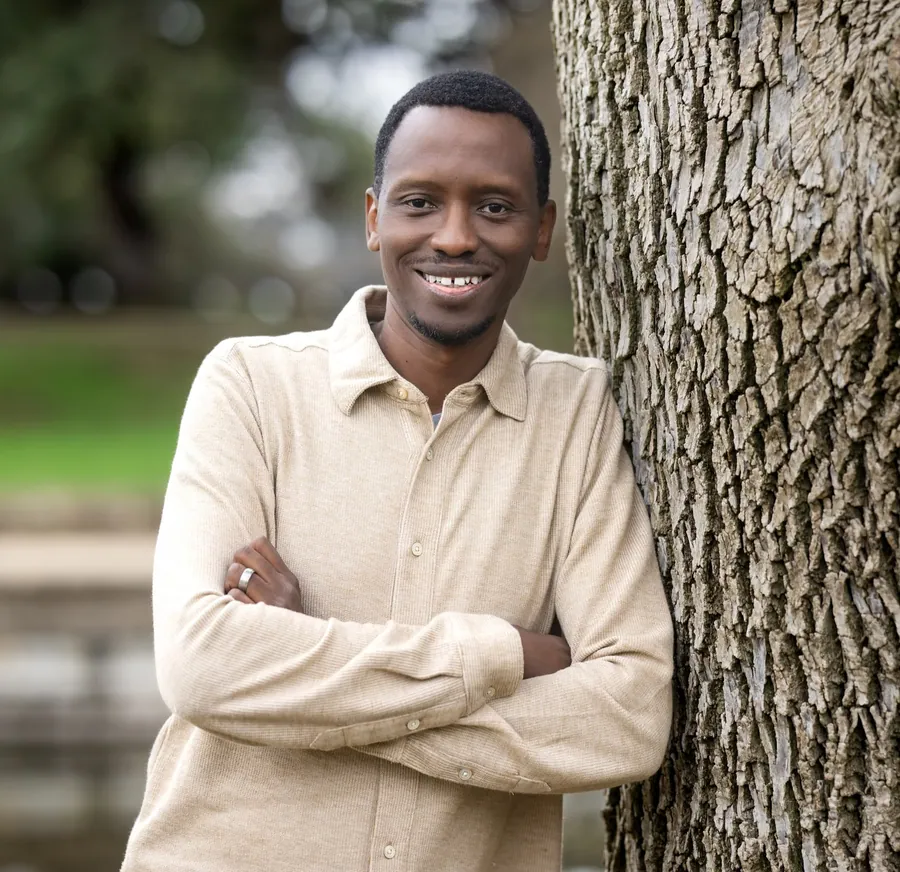
Pesa Shayo joins Mumzibah to discuss the cultural differences and family expectations that couples encounter in courtship and marriage.
- Podcast
- MUMZIBAH TALKS DAILY PODCAST
- Host
- Mumzibah
- Published
- Guest
- Pesa Shayo
Listen
MUMZIBAH TALKS DAILY PODCAST
Episode overview
About this conversation
When Love Meets Culture explores the challenges that arise when a relationship brings together different cultural backgrounds and family expectations.
Pesa joins Mumzibah for a conversation about love, marriage, and the differences couples need to understand as they build a life together.
Key takeaways
Marriage principles discussed
- Discuss cultural expectations while building a relationship.
- Recognize the influence of family and society on marriage decisions.
- Make room to understand a partner's background.
Interview transcript
MUMZIBAH TALKS DAILY PODCAST transcript
Transcript note: Published with permission. This transcript was automatically generated from the original public recording and formatted into timestamped paragraphs, with limited corrections to established names and recurring terms. Speaker labels are omitted where they could not be verified, and transcription errors may remain. Listen to the original recording for the exact wording.
Yes. Yes. How are you doing? Very well. You know, we've been participating for the stage. Oh. So finally, we have you, Pesa, here. Yes. And I'm glad to be here. All right. Thank you so much. So how are you doing today? How is your place? How's everything? It's just hard today, it's very hard, but we don't complain.
Okay, all right. Yes. We don't complain, you know, God is the voice of everything. Yes, God is great. All right, are you ready to do this today? Yes, hold on. I'm trying to make sure that my, there's this thing that says, okay, there you go. Okay, I am ready.
Good. We do this. Hey, everyone. Welcome back to Mumzibah Talks Daily. For Saturday, we are having a very, very interesting conversation about something beautiful, but sometimes really, really challenging, okay, so when love needs culture, we can fall in love with someone and later on discover that while in our heart we speak the same language, our family traditions, expectations, and cultural background, do not always sometimes feel the same, from food and family roles to parenting, finances, traditions, and oftentimes how we express love culture, Influences marriages in ways, most times we do not really always understand things.
So today we are asking, can love successfully bridge cultural differences in marriage? And what does it actually take to make it work? Let's dive right into it. Today we are having a very interesting guest and his name is Pessa. I don't know, is it Syo or Syo or I don't know.
All right so Pesa how are you doing? I am doing very well I'm so glad to be here. Okay good. So Pesa where are you from can we have no a little brief about Pesa for about two minutes before we dive right into it. So originally, Pesa is from Kenya in Africa. So Kenya, yeah. And a fun fact is in Kenya, Pesa actually means money so going through my schooling all that there was always so many jokes about Pesa you just hear my name and the joke start there is always there's so many jokes about can I have more money give me more money and
and how much money do you have? Who named you that name? But, you know what? It's my name. And it means money. And I'm married to Whitney. And this is why I'm here because we are coming from two different cultures. I'm Kenyan. She's American. And the fact that we in a marriage were two different cultures event.
At first there was no problem, but later and there was a lot of clashes. And the clash, we realized it wasn't because we had less love, it's because we were literally having, we are operating from two rule books. Yeah. Yes. She might be talking about one thing. She's talking about family.
I understand she's talking about family but what I'm thinking about our family is totally different. We even had this conversation the other day. We remember there was a time I had a cousin, a cousin and at that time she was questioning me like how are you guys related?
This is not your cousin. I have never heard of this guy. How's this your cousin? And actually this guy who I was calling a cousin really good friend. Actually it's been the fact that we come from the same city. So we call, I was calling a lot of people brothers and cousins and nieces and nephews, but just go on. Go on out with you. Go on. Yes. Okay. All right. Yes. Okay let's do this.
Okay can you hear me? Yes I can hear you. Yes. And so that was something that it took us a I'm not reading from the same rulebook, and I'm glad we started realizing that it's not just about love but starting to be able to work together as a team, as a United Front.
And I'm glad we were able to do that. Okay, so Pesa what did you do for a living? Are you a pastor or what did you do for a living? So I'm not a pastor, right now I am doing the marriage ministry at Live Your Best Marriage But before this I was a nurse so I used to work as a nurse and I did that for so many years And that also helped me just connect with so many people because I just enjoy that Alright beautiful. So right then, beautiful Everyone listening to this has seen Moms About Talk Daily podcast
and we have a very interesting guest, Pesa telling us a little bit about himself and it's very very interesting. So let's open our hearts, pick a cozy spot as usual, pick up your dressing pad because you're gonna go into this and I know you're gonna be learning one or two so Pesa, let's see when love means culture, let's start at the very beginning. When two persons and two people from different cultural backgrounds fall in love. What are some of the cultural differences they should have conversations about before actually getting into marriage,
rather than just discovering them along the way in marriage? What are those things? You know, some of the first things they should start having conversations with is just for example, Do you have any expectations? Does your family expect some things from you? If it's like, from back home, do they expect something from you?
This sounds not a big deal but for a lot of couples when they get married, they love each other and then there is one person who has expectations maybe they are supposed to take care of their kids, their siblings Maybe they are supposed to send their siblings to school, pay school fees, help their parents or they're making sure that their parents will never go to a nursing home.
So some of these expectations need to be put out in the open. Some things are money. Money has been a big issue and a lot of couples have money problems but when you add two cultures you start realizing it's not just about the budget. You need to have a conversation, what does that money really mean to you?
Especially if it involves extended family because sometimes when it's involving extended family it actually might be meaning that if they say no, they will be seen as a bad child,
as a bad son. If they say no, there'll be seen as they are abandoning the people who help them come to where they are right now. So having this conversation, what does really money mean in your family? And also respect. That's another big problem we encounter, respect. In some families the idea that you can talk back to your parent is seen as such a bad thing But in some families, in some cultures, that is just seen as having a conversation Yes, and being at the place yourself Yeah, yeah So knowing that something might be seen as unrespectful in some families but in another family it would be just okay.
So having these conversations, we've had issues where even they're just addressing these people meeting in America, they are fine But when they go back home the lady is expected to cover her head Of course She did not think it would apply to her, now she's upset But this was already there and she would have found out if she had this conversation ahead of time Earlier, yes, beautiful Guys you see it is very important we put a lot of things into check right before diving into marriage Especially when you are coming from different cultural perspectives
It's very, very important you create awareness. You let your partner know what is acceptable Okay with your culture and what is not and so your partner do that vis-a-vis And by so doing it becomes a very very soft landing for the relationship to meet Success in the long run. Thank you so much. I love this. So let's look into the family expectations and traditions now Now, sometimes you are not just marrying an individual. You are also entering into a family and a culture with its own expectations.
How do couples navigate situations where family traditions or expectations conflict with what the couple wants for their own marriages? How do they navigate this? So, this one is very important We what we teach and what we've gone through and this was a hard one for us was first being able to do what's called Transfering loyalty. So as you're building this new marriage here your wife your kid And you are saying you are navigating this new marriage You also need to realize if I'm building a new marriage here I need to transform my loyalty from my family of origin to this new family
and if that doesn't happen, if somebody always says you know I can't do that because blood is thicker than water blood, I cannot abandon blood when someone's telling you that they're just telling you that they put more emphasis on their family of origin than this new family they are building. So, they are not going to defend their new family.
But if you want things to be easier for especially when you're making decisions later, make it clear that your priority is your new family. You're not saying that you are going to abandon your origin. Yeah, you are not abandoning. You are just becoming that person who can have two You are transferring loans to your new family, but at the same time you can be able to help your family of origin participate in things like that But at the same time they know that your new family is your priority If you can balance those two things a lot of problems have been solved
Okay. And then the next thing when you are navigating this situation is decisions. You gotta know there are some decisions that you and your wife will make together. So like where do we live? Where do the kids go to school? Which car do we buy? Things like that. Like you just make your own decisions in your own home. But there are some things that you are going to tell your family of origin. Let's say like you're trying to take care of your parent and each sibling, all your brothers and sisters are chipping in or maybe you're preparing for a funeral and
everybody is coming up with ideas. So you're making decisions together. But even when you are making decisions together, you still have to say, okay, this is not going, I can't afford this. So you know how much you can help even if you are making decisions together. So I think being aware that there are some decisions you make as a couple.
Yeah. And there are some decisions you are willing to talk to your family of origin and have those But at the same time you say this is how much I can do This is how much load I can carry Okay, beautiful. Very very beautiful Alright let's look into… you're doing so well Pesa I'm really enjoying everything you're saying And for an African man to be like this, I think it's, and now I'm not trying to disqualify African culture here, but I'm just trying to be real because one thing about African men is they don't,
I don't think they give so much credit to, okay, let's do this so much, yeah, you know, in regard of the woman's family so much, I don't want to look up here so weak, you know, all those kind of things. So I give it to you for your honesty, I give it to you for your transparency and truth. All right, so look at that.
gender roles and expectations. Culture can strongly influence what a husband and a wife believe their role should look like. One person might grow up believing this is what the husband should do while the other has completely different kind of understanding just as we've been talking before So how can couple negotiate cultural expectations around gender roles without one person feeling like they're giving up their identity?
Thank you. That is very important because at the same time, you don't want to be giving up your identity and this is why we always say between all the roles that you have like there, like taking the kids to school, all the kids running a house, paying bills, all these roles you do.
And also there's also this thing we call like intimacy, your feeling like you're a lover to your wife. There's something in the middle which we call friendship. Friendship. So you have to have friendship with your spouse. and the reason why we say this because when you think somebody as a friend, you want to help them.
So when you are negotiating these roles, gender identity, and she's saying it's too much for me or I can't handle this, because you view her as a friend, you're more likely to find out the best way to make it work for her but if you just view her as this person in your house now you are saying No, no, my culture is now you cannot change. You are very rigid.
Yeah, very friendly. Is that friendship in there? Like you know what this is the same person I married, this is the person I really wanted to marry and maybe she's overwhelmed right now, she feels like it's too much or maybe I'm expecting her to cook for all my relatives when they come to visit me because that's the culture but she is so overwhelmed I can use culture as a punishment or something to punish her or I can use it to say, okay this is what's happening but at the same time what we can do to make it easy for you so that it works
Beautiful. Very beautiful. This is a call to every single out there and everyone in courtship, I just want to chip this in It's very important most times that you have a friendship with someone you're getting into marriage with Because on those notes it makes things easier for you If you don't get into marriage because of this trend of thing or this end time because you wonder if you get into marriage because of money, you get into marriage because people are getting into marriage or those flimsy things and you might not last so long in that marriage
and even if you're there it might not be on the seats where you can have your voice being heard or being seen at most times because you're going to be seeing as I'm just doing you a favor or just a partner or just a roommate I'm the man, I'm the woman, I'm the breadwinner this is how it must be So ways to have this courtship period is a time to grow friendship with your partner, understand your partner and so it's gonna help you in your marriage. Alright? So let's be on the lookout for
that. Let's look at the aspects of raising children between two cultures now. When parents come from totally different cultures they may have completely different ideas about how their that children should be raised, you know? And languages, barrier, religion, discipline, tradition, food names, even what values should take priority.
So now how do couple decide which tradition to keep, which one to let go of and how to give their children a sense of identity that embraces both cultures? Thank you, thank you. So when it comes to having two cultures, which one wins? And sometimes they might even be complicated when somebody has what we call it a home ground advantage.
Let's say you are in Europe and you're married to somebody from there. So actually you are in their country and they have the home ground advantage. And now it's like, okay, whose culture wins? The one who is from that country or the other one. and what we teach is, and this we have practice in our home, is when you're at home, both cultures are the same. So it's not American, it's not Kenyan, we are both the same. So at that point for that to work especially the one who's in their country they need to show a lot of
curiosity. It's like okay how do you guys do this? Because they might be very offended like okay You are coming in my house and you're speaking your language or you are teaching the kids this other weird language They might be like, it's not weird but they are no use to that So we find a lot of problems when one person feels that their culture is superior because it's in the country and they want you to listen and do things their way Like in my house we've created what we call Tim Shire
So, it's our little culture where both cultures exist and we have our own way of doing things. And my kids, our kids speak both languages so they speak English and they also speak Swahili or my language because they need to have both cultures. Their names, their names, they have English names and also Swahili names. And this was a hard thing in the beginning because in the beginning when we were naming our first daughter, there was a big problem.
My wife thought oh it's my child I was pregnant for nine months I have to name this baby. Yeah okay and a lot of couples go through naming problems but for us it was different because where i came from my culture we expected that first born has to be named after my grandmother Okay. It's either my grandmother or my grandfather because it was a girl, it was to be named after my grandmother so for us it was so important that our culture should not be taken over we literally thought if we don't name
this child the way we do it our culture will like we will disappear our culture will lose our culture Yes, so eventually there was a lot of back and forth and I'm telling you it was insane at that time but she chose the first name. So then the compromise we did was she picks the first name, we pick the second name which is my grandmother's name and then the family name. But that compromise meant that she had to give up something and we had to give up something and then come up with a way that works for both.
All right, okay. Yes I would say for other couples don't have this is a hard one, don't have a home ground advantage just because we're in their country does not mean your culture is less than theirs that's one and two be willing to work out solutions that will like a compromise don't yes you are sticking with your point and she's sticking with her point but come up with a compromise that both of you can be satisfied. Yes, beautiful thank you so much.
Fesa, I've let this out for 30 minutes. I hope to have this sometime with you again. I don't know if you have a chance to because I love this particular topic and everything you're talking about because this is reality or some reality that people do not really know how to go about, how to figure and so forth. I'm really shy to talk about this. So I really appreciate So right now we will be rounding it up in 8 minutes and I, we have a very special segment, we normally engage our guests in why you do not need to overthink, but just to loosen up,
all right, this is called the Mumpire of Round. Okay, so I'm gonna be asking you, you're not gonna think too much about it, but you're gonna say something. Are you ready? Okay, I'm ready. All All right, okay, so culture shock. What's one cultural difference that could genuinely make you say, wait, you people actually do this?
Hmm. One thing was coming and seeing people eating seafood that has all the crusts like this, the shellfish, the shellfish and the shrimps and all that I could not believe that it was even possible to eat that. Alright! Let's look at the food butter. You learn to someone from a completely different and you can only keep one cuisine in the house. Who's cuisine wins? Be honest.
Mine. My cuisine. Your cuisine, why? Why? Okay, okay all right. Let's look at the illo question. What's one thing you think couples should never allow their families to decide for them? If love and culture disagree on something important in your marriage, which one should take the lead and why?
Love and friendship. Because culture is just the way I was taught to think about the world, and sometimes I might be having a hard time because of the way I was taught to think about the world, and I can change and have a new way of thinking. So yes, love and friendship.
Okay, thank you. Thank you. Wow, it's beautiful. All right. Thank you so much, Pessa. Pessa, people might want to get to you. How can they reach you? Your number because they might want to still learn more about you, know more about your books and your counseling therapy and all those.
So how can they reach you? Your website, how can they reach you? Your number? So yeah, they can reach us, reach me at the website LiveYourBestMarriage which is l-i-v-e and also on Instagram we are using the same Live Your Best Marriage app, Live Your Best Marriage on Instagram.
If you want to send me a message, you can also send me at mine is 210-110-816-1317 All right, beautiful, beautiful. What a conversation! I think one of the biggest lessons here is actually that cultural differences don't necessarily have to divide in marriage. Sometimes they can actually give two people the opportunity to learn, to grow and to create something beautiful that belongs uniquely to them because marriage isn't necessarily about choosing your culture or and also my culture. Sometimes it's about creating our culture, you know?
This is very beautiful! I learned so much from you, Pesa, today. Thank you, thank you. So guys this has been your host, Mom Siva and if you're listening to Mom Siva Talks Daily Podcast this podcast is open for guests around the world. Mom Siva Talks Daily Podcast covers organically listener's reach over 10 countries and that's to show we build value.
And that's why people come tuning in to Mumzibah Talks Daily Podcast to the case you're one of each feature, just as Pesa has come to talk about what he does. You wanna promote your product, you wanna promote your business services or whatever you do. You can write me via my email at momzibaatgmail.com momzibizepelt, S-M-U-M-Z-I-B-A-H-H at gmail.com and also you can visit me via my website at momzibat.com.
Beautiful! Guys, thank you so much for joining us today and thank you to everyone listening to Mumzibah Talks Daily Podcast. Remain living as a vet in your relationship. God bless you. Thank you so much, Pesa. Thank you. Thank you, Mumzibah. I really enjoyed this.
Credits and links
About this podcast appearance
This episode of MUMZIBAH TALKS DAILY PODCAST features Pesa Shayo in conversation with Mumzibah. Visit the original episode on Spotify for the publisher’s recording and show notes.
Learn more about Pesa Shayo, explore his books, or browse more podcast appearances. Marriage resources are available from Live Your Best Marriage.